
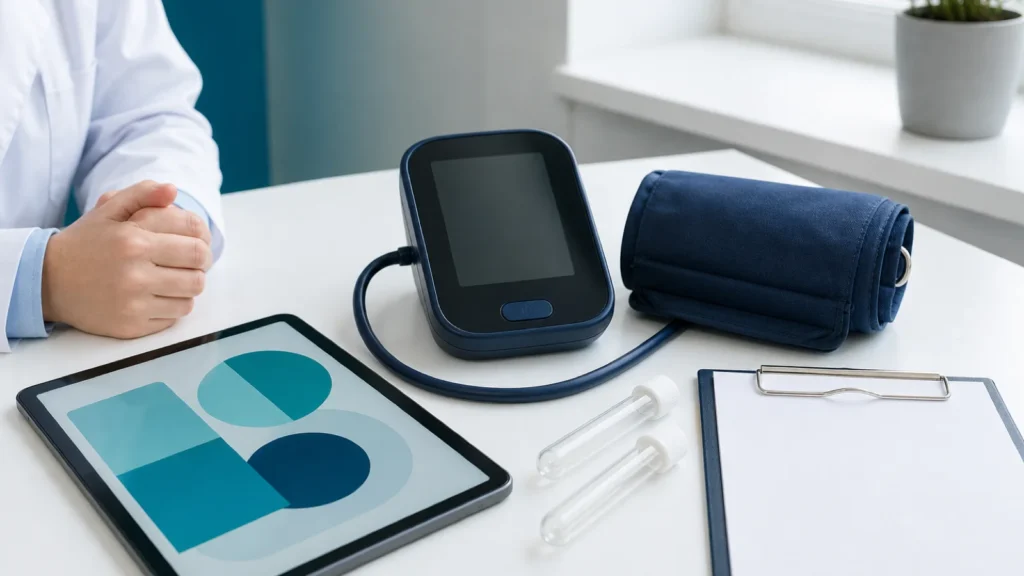
Many of us think about our health most when something starts to feel wrong. However, some common health risk factors can develop gradually and may not cause obvious symptoms in their early stages.
A preventive health check can provide a broader picture of your current health, identify selected risk factors and help you understand whether any follow-up, monitoring or lifestyle changes may be worth discussing.
The aim is not to perform as many tests as possible. It is to choose appropriate checks and consider the results in the context of the individual.
What is a preventive health check?
A preventive health check is an assessment of selected areas of your health, often before there is a specific diagnosis or medical problem.
What is appropriate will vary from person to person. Age, medical history, family history, lifestyle, current symptoms, medicines and existing health conditions can all influence which checks may be useful.
A health assessment may include clinical measurements, discussion of your health history and selected laboratory tests. Results should be interpreted together rather than viewed as isolated numbers.
What might a preventive health check include?
Depending on the type of assessment and your individual circumstances, checks may include:
- blood pressure
- weight and other relevant body measurements
- blood glucose or diabetes-related testing where appropriate
- cholesterol and other cardiovascular risk factors
- selected blood tests
- review of current medicines and existing medical conditions
- relevant personal and family medical history
- lifestyle factors such as smoking, alcohol, physical activity and diet
Not everyone needs every test.
The most useful assessment is one that considers which checks are appropriate for the individual rather than simply requesting the largest possible panel.
A useful health check is not about doing as many tests as possible. It is about choosing appropriate checks and interpreting the results in context.
Why can checking health risk factors earlier be useful?
Some important risk factors do not always cause noticeable symptoms.
For example, high blood pressure commonly has no obvious symptoms, and high cholesterol is usually identified through a blood test rather than through how a person feels.
Type 2 diabetes can also develop gradually, and some people may have few or no obvious symptoms.
Finding a risk factor does not automatically mean that you have a serious medical condition. It provides information that can be considered alongside your overall health and, where necessary, discussed with an appropriate healthcare professional.
Depending on the finding, the next step might involve lifestyle changes, repeat monitoring, additional investigation or referral for further clinical assessment.
Who may consider a preventive health assessment?
There is no single health-check schedule that is suitable for everyone.
You may wish to discuss a preventive assessment if you:
- would like a clearer understanding of your current health
- have not had basic health measurements checked for some time
- have a family history of certain medical conditions
- have lifestyle-related risk factors
- want to review your health as you get older
- have previously been advised to monitor a particular risk factor
If you already have new, persistent or concerning symptoms, a targeted medical consultation may be more appropriate than relying on a general preventive health package.
How should you prepare?
Preparation depends on the tests included in your appointment.
Before attending, it can be useful to have information about:
- medicines and supplements you currently take
- existing health conditions
- allergies
- previous relevant test results
- family medical history
- any symptoms or concerns you currently have
Some laboratory tests may require specific preparation while others do not.
Always follow the instructions provided for your particular appointment rather than assuming that fasting or another preparation is required.
What happens during a health check?
The exact process depends on the assessment you have chosen.
It may involve a discussion about your medical and family history, routine measurements such as blood pressure and the collection of blood or other samples where appropriate.
This information helps provide context for the laboratory results.
If you are unsure about any part of the assessment, ask what a test is intended to measure and whether any preparation or follow-up may be required.
Understanding your results
A useful health assessment should provide more than a list of numbers.
Laboratory and clinical results often need to be considered alongside factors such as age, medical history, current symptoms, medicines and other risk factors.
Some results may be within the expected range and provide reassurance.
Others may need to be repeated, monitored or discussed further.
An isolated result should not be used to diagnose yourself without considering the wider clinical picture.
Can a preventive health check replace your GP?
No.
A private preventive health assessment can provide useful information, but it does not replace your NHS GP, NHS screening programmes or ongoing medical care.
Your GP or another appropriate healthcare professional may still need to manage existing conditions, prescribe medicines, assess symptoms or arrange further care.
If you develop new, persistent or concerning symptoms, seek appropriate medical advice rather than waiting for a routine health check.
Preventive health assessments at Elixier Diagnostics
At Elixier Diagnostics, the purpose of preventive health assessment is to help people better understand selected health risk factors and make more informed decisions about appropriate next steps.
The appropriate assessment will depend on the individual.
If you are unsure which type of health check is suitable for you, the Elixier Diagnostics team can help explain the available options before you book.
The key message
No health check can predict every future health problem, and no single test provides a complete picture of your health.
However, understanding relevant health measurements and risk factors can help support more informed conversations about your health and whether any further action may be appropriate.
This article is for general health information only and is not a substitute for personalised medical advice, diagnosis or treatment. If you have symptoms or concerns about your health, seek advice from an appropriate healthcare professional.